There we were, waiting to go for a meal, what app to use, and why. With my favorite SlugBug game replacement Foursquare changing to something it didn’t used to be, I pondered what app to use for restaurants….


Treat yourself like someone you are responsible for helping, and always have a mountain in life to climb

There we were, waiting to go for a meal, what app to use, and why. With my favorite SlugBug game replacement Foursquare changing to something it didn’t used to be, I pondered what app to use for restaurants….

I was less excited by the issue of Google’s losing web search ground, as the fact that simple search engines are losing ground. It is inevitable; however, and not doom and gloom for anyone. As more people use the Internet, and more granularity is important, there are better communities for specific areas. One engine, one site, will not rule them all.
Disclaimer: I am not an avid Facebook user, I use Google a great deal, I have a Polyvore and Pinterest account, and I love Google Now. And I will miss Goodreads when I leave.
Google’s Eroding Lead in Web Search | Though Google is the undisputed king of search, alternative services are chipping into its share of the market, Claire Cain Miller reports in The New York Times.
The nature of search is changing, especially as more people search for what they want to buy, eat or learn on their mobile devices. This has put the $22 billion search industry, perhaps the most lucrative and influential of online businesses, at its most significant crossroad since its invention.
No longer do consumers want to search the Web like the index of a book – finding links at which a particular keyword appears. They expect new kinds of customized search, like that on topical sites like Yelp, TripAdvisor or Amazon, which are chipping away at Google’s hold. Google and its competitors are trying to develop the knowledge and comprehension to answer specific queries, not just point users in the right direction.
People are overwhelmed at how crowded the Internet has become – Google says there are 30 trillion Web addresses, up from one trillion five years ago – and users expect their computers and phones to be smarter and do more for them. Many of the new efforts are services that people don’t even think of as search engines.
Amazon, for example, has a larger share than Google of shopping searches, the most lucrative kind because people are in the mood to buy something. On sites like Pinterest and Polyvore, users have assembled their favorite things from around the Web to produce results when you search for, say, “lace dress.” On smartphones, people skip Google and go directly to apps, like Kayak or Weather Underground. Other apps send people information, like traffic or flight delays, before they even ask for it.
People use YouTube to search for things like how to tie a bow tie, Siri to search on their iPhones, online maps to find local places and Facebook to find things their friends have liked. And services like LinkedIn Influencers and Quora are trying to be different kinds of search engines – places to find high-quality, expert content and avoid weeding through everything else on the Web. On Quora, questions like “What was it like to work for Steve Jobs?” get answered by people with firsthand knowledge, something Google cannot provide.


I found this on Cool Toolsm file it under freelancing – Incredible Secret Money Machine
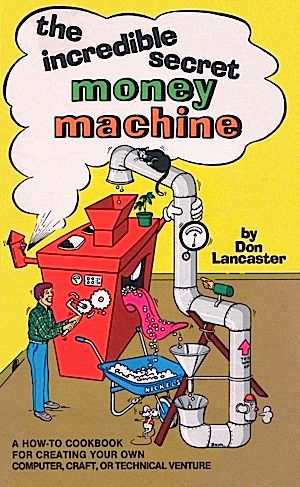
When I first started to get serious about making money I ran into this book written in 1978 by a hippy-hacker living in Arizona. His advice was aimed at “craft and technical” types who wanted to create a small business “doing their thing” whether that was creating ceramic pots, designing outdoor gear, or writing computer code. He talked about doing a starting up before that term was subverted by the implication that your start up would take over the world. Instead the author preached one-person self-employment that made you a living. The concept of entrepreneurism as a small-time life-style has evaporated from the culture, and now entrepreneur and start-up means “get big fast.”
That did not appeal to me then, or now. But making a living doing what I was passionate about did. I learned how to earn a self-employed living from this book, which was mostly about what not to do. (I have been self-employed now for most of my adult life.) A lot of Don Lancaster’s specific examples are now terribly dated, but his core principles still stand and are worth listening to particularly if you are starting out. (If you are already successfully self-employed this book won’t help you much.) His idea that you should aim for a business that grows organically (income > expenses), is a total life-style approach (your business is you), and is dependent on your own value-added rather than market domination is as potent as ever.
If I had to sum up this book in my own words it would be; “If you are willing to build your business on expertise, you can make a living instead of making a fortune — and occasionally the fortune comes anyway.”
Best of all, unlike any other “make-money” book I know of, this one is free. You can read the author’s PDF version of the original paper book.
— KK
Incredible Secret Money Making Machine
Don Lancaster
PDF, Free
Available from The Guru’s Lair
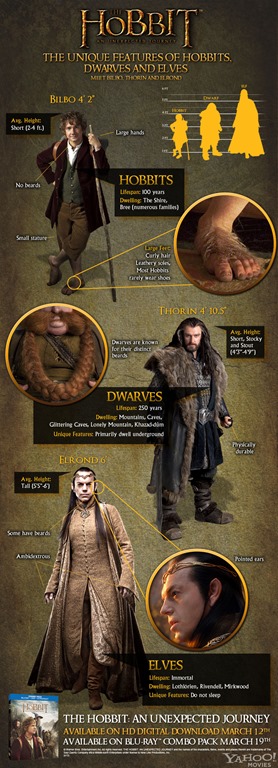
I just got The Hobbit: An Unexpected Journey as a gift and I wondered how someone who knows nothing watches this movie. Then I found this.
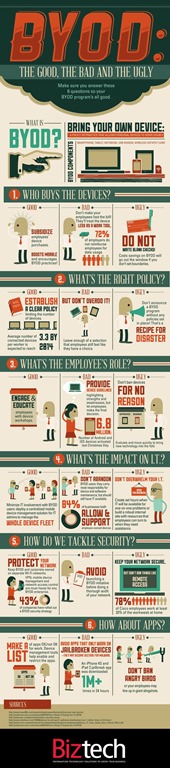
This infographic is here to help you sort out the differences in the inhabitants of Middle Earth, both large and small. It was posted on Yahoo! Movies and it’s there to give moviegoers who are unfamiliar with J.R.R. Tolkien’s work a sort of visual guide to the characters they’ll encounter in the films. In the Lord of the Rings films and The Hobbit, elves (Elrond once again being played by Hugo Weaving in The Hobbit) are, besides humans, the tallest of Middle Earth’s races and they’re also immortal and never sleep.
For more fun info on Middle Earth and its people have a look at the infographic below and have a great day! [Via]
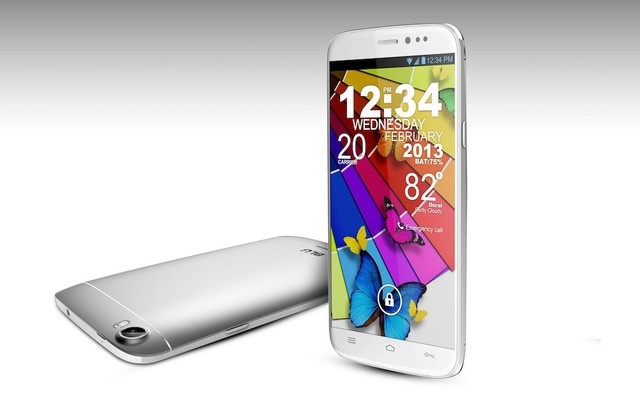
Someone was reading The Verge and found this information on Blu and their new phones. What do you think? Full article here.
UPDATE: Here is the Blu phone on Amazon
One cheap, high-end, unlocked smartphone at a time
By David Pierce
DON’T MISS ANY STORIES FOLLOW THE VERGE
Sammy Ohev-Zion starts our chat with an economics lesson. It costs every company about the same amount to manufacture a phone, he says — the price of an Nvidia processor and a Sharp display is consistent whether HTC, Nokia, or Motorola is signing the check. But those costs are only a small piece of the price you wind up paying when you walk into a Verizon store and buy that phone — which either costs upward of $500 or requires a hefty two-year contract. You’re also paying for Samsung’s nine-figure marketing budget, HTC’s HR department, or Sony’s huge New York City skyscraper. What if you could buy the same high-end phone from a company without all that cruft and overhead? How much would it cost?
Ohev-Zion, CEO of Blu Products, a relatively unknown manufacturer based in Miami, Florida, says it would cost $299. That’s how much the company’s latest flagship phone, the Blu Life One, costs unlocked from Amazon or a handful of other retailers. It’s a 5-inch HD phone with a 13-megapixel camera and stock Android 4.2 (save for a Blu wallpaper), in a thin and light body that appears to hold its own next to the Galaxy and Droid devices of the world. $299 also buys the Blu Life View, with a gigantic 5.7-inch HD display, a 12-megapixel camera, and even a 5-megapixel front camera. It’s not surprising that Blu’s phones bear more than a passing resemblance to the iPhone and a handful of Android devices, but neither is it an accident. Ohev-Zion and Blu are betting that people want a good phone, but that they want a cheap phone more than they want a Samsung phone.
‘THE SAME THING, CHEAPER’ IS A PRETTY PROVEN BUSINESS MODELThere’s some evidence that Ohev-Zion’s confidence isn’t totally misplaced. Take Warby Parker, for instance: the companycircumvented an entrenched supply chain of designers, manufacturers, suppliers, and retailers, and in doing so found a way to sell equally high-quality eyeglasses for a much lower price. Or consider Nicky Bronner, whose father’s connections helped him getUnreal Candy into CVS, Target, and elsewhere — he tweaked the formula of candies like Reese’s Peanut Butter Cups to only include natural ingredients, and found a huge and willing audience as soon as he had a place on shelves. Vizio may be Blu’s best analog, though. "Vizio is the #1-selling TV brand," Ohev-Zion says. "Why? Because people understand, ‘listen, it’s the same technology and I’m getting a much better value without the enormous, billions-of-dollars overhead.’" (Incidentally, Vizio seems to have noticed this too — the company announcedits first line of smartphones at CES.)
……..
But Blu is growing — from 70,000 units in 2009, its first year, to 4.1 million last year — and it’s growing in key areas. A third of the company’s 300 employees are stationed around Latin America, where they’re selling both feature phones and smartphones to a region that is only slowly adopting mobile technology. But as Latin American phone use grows, so will Blu: "we’re in a supreme position" in the region, Ohev-Zion says. "We’re the only ones."